














Important Notice: Industry Supply Shortages and Upcoming Bancha Restrictions
Today, we are sharing an important update on the changing climate of Japanese tea.
Demand for Matcha has dramatically grown globally in recent years. To meet this demand, many tea farmers are dedicating more fields to shaded tea plants to produce the base material for Matcha, Tencha. However, this shift has led to less production of other varieties of Japanese tea, which has led to supply scarcity. As a result, we will soon implement new restrictions on a selection of our Bancha tea range. From March 2026, we are placing new limitations on Bancha products like Hojicha and Genmaicha.
For details about the new restrictions, and to learn more about the current shortages and how Ippodo is responding, please read below.
Tea growing
Tea comes from the tea plant, a member of the camellia family. Tea growers are capable of producing a wide variety of Japanese teas, including Matcha, Gyokuro, Sencha, and Bancha, by adjusting how they grow and process the tea. Sencha and Bancha are grown in fields where they can soak up the sunlight. Young leaves harvested while the flavour is still concentrated in the leaf buds become Sencha, and leaves that are allowed to grow before they are picked become Bancha. Ippodo’s Hojicha, Genmaicha, and Obukucha products are all made from Bancha. In contrast, Matcha and Gyokuro come from tea plants that are shaded from the sun when the leaf buds emerge. This approach reduces bitterness and concentrates umami and sweetness. Growing tea plants in the shade reduces the nourishment that they receive from sunlight, so producers need to supplement their nutrition to ensure that the plants grow well. The additional work involved in using shaded tea fields for Matcha and Gyokuro means that these teas are more costly to grow than Sencha and Bancha.
How harvest timing affects flavour
The timing of tea harvests depends on the location and on the individual producer’s policy, but between one and three harvests a year is typical. The first harvest in spring (April or May in Kyoto) yields tea that has a high concentration of sweetness and umami components that accumulated during the winter months. Second harvest tea, picked around July, has a refreshing flavour, and third harvest tea (picked around October) has a light flavour. The first harvest tea is the most valued, attracting the highest prices.
Ippodo teas include a number of products with differing flavours, blended to ensure a consistent flavour from season to season. The mid-line and premium teas in our Matcha, Gyokuro, and Sencha product lines include large amounts of first harvest tea, whereas other classes of products are manufactured from blends of first and second harvest teas.
Producer circumstances and pricing trends
Until recently, the producer price for tea has tended to be more stable than the prices for other agricultural products. Tea farmers faced rising costs for fuel and materials, but producer prices had not risen in line with those costs. That produced a situation in which many farmers moved away from tea production, and both the number of farmers and the area under cultivation for tea were shrinking.
These circumstances and trends resulted in producer price changes during 2024, followed by a big change in producer prices in 2025.
These changes were largely driven by growth in demand. Throughout the industry, 2024 brought requests for Matcha from around the world, and producers all over Japan switched production over to Matcha to meet the growing demand.
As Japanese tea is an agricultural product, capacity increases require new plants, and tea plants need to grow for at least five years from planting to the first harvest. Moreover, the number of new entrants to farming has not been growing. Consequently, it is not easy to raise the overall level of supply to meet growth in demand in 2025. And even though large increases in Matcha production have been achieved, supplies are still insufficient to meet the demand. Moreover, a shift in production to Matcha reduces the supply of other types of tea. Consequently, producer prices rose rapidly nationwide. In Kyoto Prefecture, the average price for first harvest tea soared to about 2.5 times what it was last year, and second harvest tea is trading at 2.9 times the previous year’s average.
The biggest rise has been for Matcha, rising to 2.6 times the previous year’s price, with Gyokuro, Sencha, and Bancha rising to between 1.3 and 1.8 times the previous year’s price. In addition, the average price of Matcha is much higher than other types of tea. In Kyoto, the producer price for machine-harvested Matcha (known as tencha before it is ground into a powder to become Matcha) averaged 14,141 yen/kg, compared to 8,447 yen/kg for Gyokuro, 4,482 yen/kg for Sencha, and 1,225 yen/kg for Bancha.
These price differentials make Matcha attractive for producers, so we expect even more production capacity to shift to Matcha in 2026.
Forecast
There has been a great deal of media coverage about Matcha supply shortages, but we expect the shortages to be alleviated as time goes by. Consequently, 2026 prices are likely to remain at a similar level to 2025, rather than being driven up further.
In contrast, we are concerned about supply shortages in types of tea other than Matcha. Production levels of bancha in particular are likely to fall substantially. Bancha prices are expected to rise, but because Matcha is priced at a much higher level, we are unlikely to see a substantial shift back to the production of Bancha.
Furthermore, we expect the second harvest, which provides a portion of the leaves for Bancha, to be smaller. This is because a greater proportion of tea plants are shade-grown to produce Matcha in the first harvest. This stresses the plant, so the second harvest is often skipped for tea plants used for Matcha production. The rest allows the plants time to recover, helping to maintain or raise quality of the following year’s Matcha harvest. The intense heat of recent summers has also made working in the tea fields more difficult, which is an additional factor tending to reduce second harvest production levels.
Notice regarding changes to our Bancha product line-up
To ensure that our Bancha remains available to as many of our customers as possible during this period of limited supply, we have taken the difficult decision to discontinue sales of our certain products.
Effective Date: Sunday, 1 March 2026
Discontinued Products:
Gokujo Hojicha (Roasted Tea) 200g Bag
Gokujo Genmaicha 200g Bag
Kuki Hojicha (Roasted Stems) 200g Bag
Wakayanagi 200g Bag
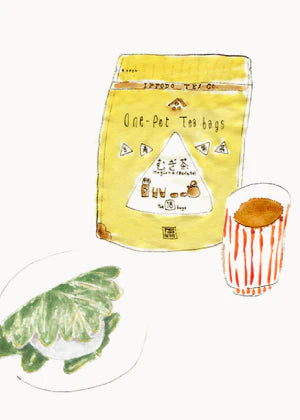
One-Cup Teabag Hojicha (2g x 12 bags)
Temporarily Unavailable Products:
Drip Tea Bag Hojicha (5g x 6 bags)
Please be advised that we may implement temporary suspensions or purchase limits on other products tea varieties in the future. These restrictions vary across different stores and channels.
We deeply apologize for the inconvenience and kindly ask for your understanding.
Global Online Store
Effective Date: Sunday, 1 March 2026
Discontinued Products:
Gokujo Hojicha (Roasted Tea) 200g Bag
Gokujo Genmaicha 200g Bag
Kuki Hojicha (Roasted Stems) 200g Bag
Wakayanagi 200g Bag
Hojiko 400g Bag
One-Cup Teabag Hojicha (2g x 108 bags)
Temporarily Unavailable Products:
Drip Tea Bag Hojicha (5g x 6 bags)
Products that will be limited soon*:
Gokujo Hojicha (Roasted Tea) 100g Bag
Gokujo Genmaicha 100g Bag
Kuki Hojicha (Roasted Stems) 100g Bag
Wakayanagi 100g Bag
One-Cup Teabag Hojicha (2g x 25 bags)
Products That May be Affected Soon*:
Hanako (Flakes) 200g Bag
Iribancha 150g Bag
Organic Hojicha 50g Bag
Organic Genmaicha 50g Bag
*More details will be announced at a later date.
Thank you for your understanding
We are grateful for our valued customers for continuing to enjoy our teas day-to-day, despite the major changes in the industry and supply shortages over the past year. At the moment, it is Matcha and Bancha that are most affected, but we cannot rule out the possibility that shortages will extend to Gyokuro and Sencha in the future.
At the same time, the higher prices will benefit our producers, who had been facing difficulties in sustaining their operations at previous producer price levels. As a result, we are happy to report that this is a turning point for the Japanese tea industry, helping to ensure its sustainability.
Ippodo Tea prioritises quality, while aiming to give customers greater value than they would expect from the price. We will continue suggesting ways to enjoy our products, and will keep on developing new products. We thank you for your understanding and look forward to continuing to serve you in the future.
Ippodo Tea Co., Ltd.